


CRASH COURSE – BANNOCK
Let’s get one thing straight right out of the gate: oven bannock and frybread are related but they are not the same. Think cousins, not twins. Close enough to recognize at a family gathering, but distinct enough to have their own personalities and perhaps very strong opinions.
Story by: Leslie Bull (White Wolf Woman)
WHAT IS FRYBREAD
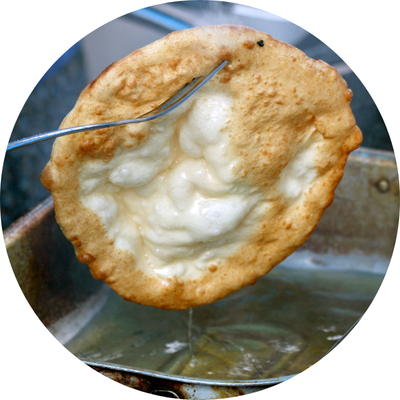
Frybread is exactly what it sounds like — dough, dropped into hot oil and transformed into something golden, crisp and undeniably indulgent. Versions of it exist all over the world, but within Cree culture, its story traces back to the southern United States Navajo, where many Indigenous communities were left with limited ingredients from rations, often rough flavourless batches of flour, salt and not much else. Out of that hardship came something deeply satisfying. Proof, perhaps, that if you fry it, it will taste good. (Just ask anyone who’s wandered the Calgary Stampede midway.)
WHAT IS BANNOCK?
Oven-baked bannock, on the other hand, arrived with Scottish settlers and found a home among the traditionally mobile Cree people — hunters and gatherers moving across the land. Bannock was practical. It was simple. It travelled well. And over time, it became something more: a staple, a comfort food and most importantly, a connection.

THE BANNOCK BASICS
Now, you might think bannock is easy. Flour, baking powder, salt, water. Done, right? Not quite. While this is the base recipe, some folks add milk, oil, eggs, even raisins and other fancy things. My early attempts were… memorable. And not in a good way. When my first husband asked me to learn how to make bannock from Nohkom, his favourite treat, he was expecting warm, soft, doughy perfection. What he got instead was overworked and dense, something resembling the ground beneath our feet, not the expected wide-open prairie clouds above our heads. Over time, my skills improved.
I I learned that good bannock needed to be loved and frybread done in bacon fat is the epitome of love. Bannock teaches you, if you let it.
MIX IT UP – WITHOUT OVERDOING IT
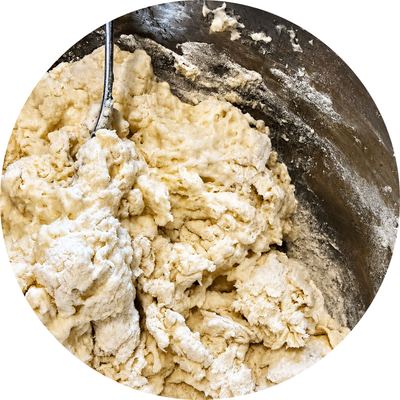
The secret is balance. Don’t overmix. Don’t overthink. The dough should feel soft and pliable, like playdough — alive in your hands (or on your fork, if you’re a neat freak like me). Bannock has a way of reflecting your energy. If you rush it, force it, or bring a bad mood into the kitchen, it shows up in the final bite. I’ve learned not to make bannock when I’m angry or sad. It just doesn’t taste right.
BAKE IT, FRY IT, FREEZE IT
Bannock is versatile. Bake it fresh or freeze the dough for later, but cook it as soon as it thaws. Let it sit too long and you lose that perfect texture. Bannock waits for no one.
TRUST YOUR CRITICS
I’ve been blessed with a big family of 32 grandchildren and two great-grandchildren and they don’t hold back. If my various bannock flavour experiments aren’t right, I hear about it. Loudly. But that’s the beauty of it. Bannock is meant to be shared, tested and talked about around the table.
SPIRITUAL CONNECTION
For me, bannock carries memory. I spent a lot of time with my grandparents while my parents were working through the lasting impacts of residential schools. When I sit down with a warm piece of bannock— butter melting into it, a little jam on top — it becomes something more than comfort, it becomes a spiritual connection, a quiet kind of healing. It takes me home.
WHAT GOES WITH BANNOCK?
Honestly? Almost anything, but most of all family and friends.
- Chili: Turn your frybread into a taco by adding cheese, tomatoes and sour cream.
- Hamburger soup: A simple yet resoundingly satisfying soup that almost warrants an article of its own.
- A hearty stew: Bannock and stew are best friends.
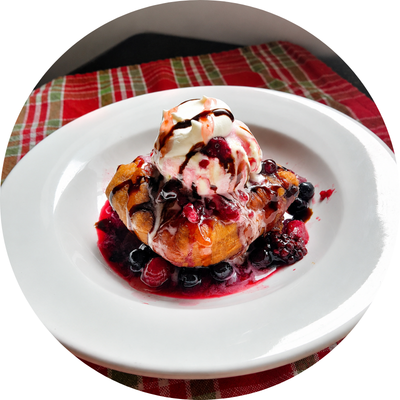
- Keep it simple: Just butter and jam or berries and whipped cream.
If it’s made really well, it can become something more than just food.





Leave A Comment