



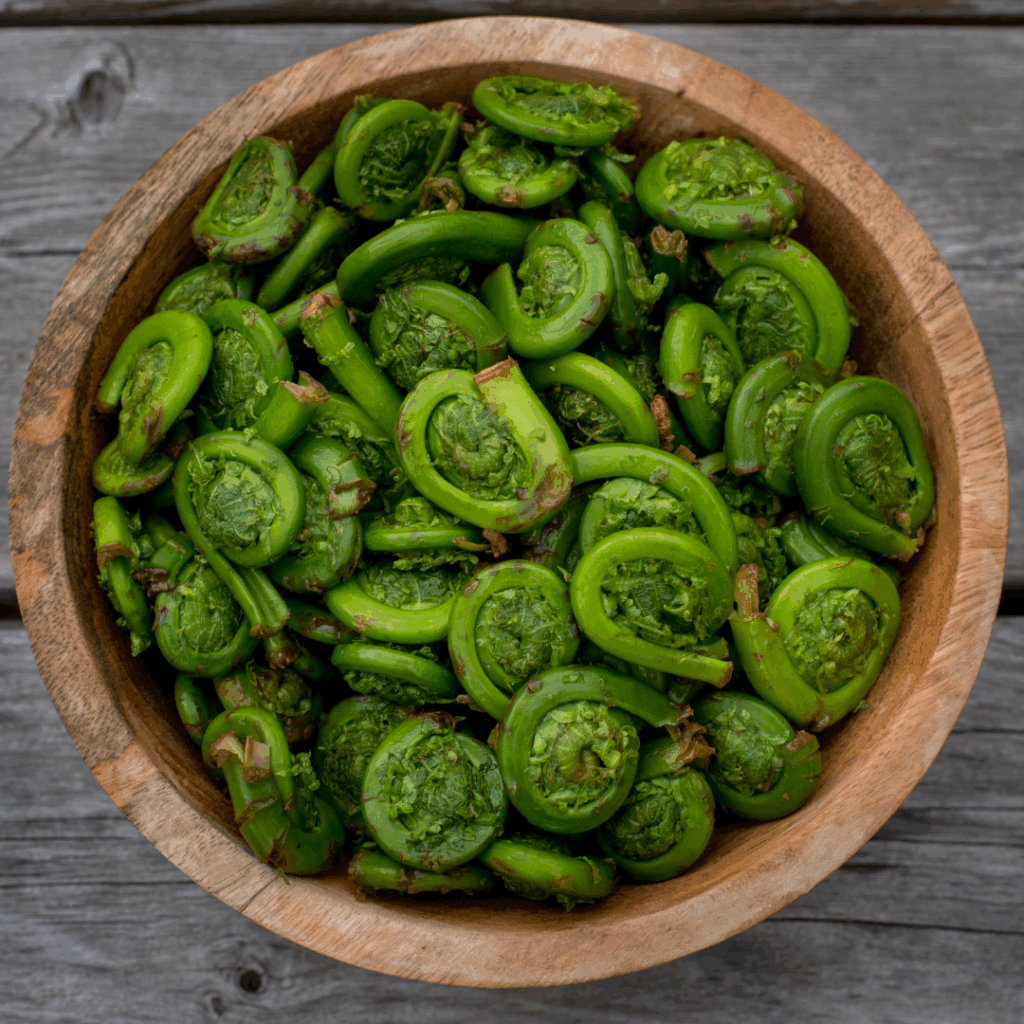
Fiddleheads appear in markets for a short window each spring, their tightly coiled fronds signalling the arrival of one of the season’s most anticipated greens.
With a flavour somewhere between asparagus and green beans, they are best enjoyed simply cooked to highlight their fresh, earthy character.
Popular in many cultures, fiddleheads have been part of Asian, Indian, Nepali, North American, and even Māori diets for centuries. While both commercially grown and foraged in wet areas of northeastern North America (even British Columbia and Alberta), they’re considered particularly emblematic of New Brunswick, where the village of Tidehead claims the title of “Fiddlehead Capital of the World.” Regardless of where they are from, fiddlehead season is fleeting —briefly here and then gone. Although sometimes sold frozen, I honestly wouldn’t bother. The fresh seasonal fiddleheads we find in the markets this time of year are far superior.
When purchasing (or even foraging) fiddleheads, choose firm, tightly coiled croziers brightly coloured and with no signs of yellowing or softness. Trimmed and washed well, they should be cooked — steamed, blanched, sautéed — and eaten right away. If you must keep them, wrap well and refrigerate for no more than two days.
Fiddleheads have a slightly chewy texture with a distinctive earthy flavour, some say a cross between asparagus, green bean and okra. They are rich in potassium, but a few varieties (bracken) can be toxic for some people. Look for the ostrich fern’s characteristic V-shaped groove on the back of the stem and the feathery brown chaff that is easily brushed away.
Ostrich ferns make great edible ornamental plants. In the right conditions, they come back year after year. Look for ostrich fern crowns at your favourite nursery. Whether you’ve planted enough to harvest or you’re out foraging, remember, only take a couple of fiddleheads from each crown. Don’t be greedy and you’ll be rewarded.
It’s always a good idea to cook any fiddleheads before consuming but please avoid overcooking — they quickly become dull and mushy, losing their appealing green colour and crunchy texture. Blanch fiddleheads in boiling salted water for 2-3 minutes to preserve their colour and texture before adding to various preparations like stir-fries, soups, stews, and even salads. Don’t put them in an ice bath which can cause them to discolour. Most people just want the curled crozier of the fern, but as long as the fiddlehead is fresh and tightly coiled, the trimmed stem is perfectly edible.
Fiddleheads can be used pretty much anywhere you would use green beans and asparagus. An easy favourite preparation I often employ for green beans: blanch, drain and quickly sauté in hot garlic-infused olive oil, then finish with a generous sprinkling of kosher salt and dried chiles.
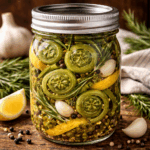
Pickled Fiddleheads
Ingredients
- 4 cups water
- 2 tbsp kosher salt
- 1 tbsp sugar (optional)
- 2 cups white wine or Champagne vinegar
- water for blanching
- 2.2 lbs fresh fiddleheads, washed and trimmed
- 5-6 cloves garlic, lightly crushed
- 1 lemon (for peel)
- 6-8 whole black peppercorns
- rosemary or thyme, several sprigs, or other favourite herb
Instructions
- Boil the water with the salt and sugar (if using), remove from the heat and add the vinegar. Set aside.
- Bring about 5-6 litres of water to a boil. Add the washed and trimmed fiddleheads and cook for about 2 minutes. Drain immediately.
- Pack the fiddleheads into one or two large jars along with garlic, lemon zest, peppercorns and herbs. (the skin/zest from lemon with a potato peeler, avoiding as much of the white pith as you can.)




Leave A Comment