



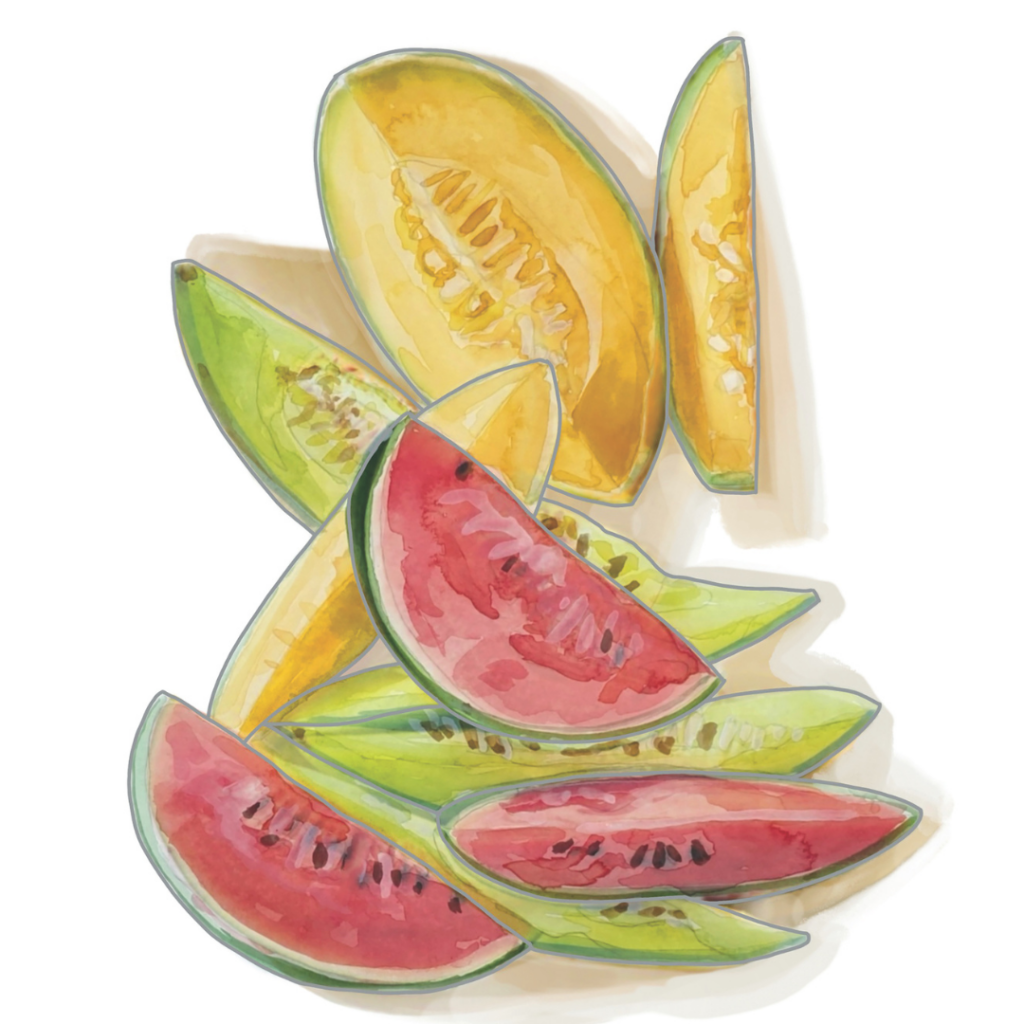
A ripe melon is one of summer’s simplest pleasures.
Learn how to choose the best melons at the market or grocery store and explore a few varieties you may not have tried before.
Artwork by Alison Martin
Sweet, luscious, fragrant and refreshing — melons could easily be the poster fruit for summer. They can be found year round, but summer is their time to shine. Prices and quality are better, as with any produce in season, and nothing says picnic like a watermelon. In fact, watermelons were an ideal way to carry water in the deserts of Africa where they were first cultivated. Honeydew and cantaloupe melons, on the other hand, originated in Southwest Asia and spread through Europe before making their way to the US colonies in the late 16th century.
There are basically two species: Cucumis melo (cantaloupes, honeydews and muskmelons) and Citrullus lanatus (watermelons), and all melons belong to the gourd family, Cucurbitaceae, sharing much in common with cucumbers and both summer and winter squash. The Citrullus genera includes fruit with seeds spread throughout like watermelon, while melons like cantaloupes and honeydews have a central seed cavity and are actually more closely related to cucumbers than to watermelons.
Since melons don’t get any sweeter after they’re picked, judging their ripeness has long been fraught with a certain amount of angst.
Here are a few tips to allay the inevitable dithering in the market or grocery store:
- Knocking on a watermelon is really a thing. Give the midsection a rap or two with your knuckles. A hollow sound, like a knock at the door, is a pretty safe bet.
- A creamy (not white) “field spot” on a watermelon also suggests ripeness.
- Prominent and well-defined netting on cantaloupes is one sign of ripeness.
- Honeydew melons will turn from a greenish hue to cream when ripe.
The ripest juiciest melons are heavy for their size. Heft a few similar in size and choose the heaviest.
- Probably the best ripeness indicator for cantaloupes and honeydews is to smell them. Give the stem end a sniff for that sweet fruity aroma.
Melons store best at temperatures between that of a fridge and room temperature which is tricky at home. Purchase melons you will consume in a week or less. Once cut open, store pieces in an airtight bag or container and eat right away. Freezing is a good option since melons are mostly water, making them low in calories. The texture is affected, but the chunks make great blended drinks and refreshing snacks. Room temperature cantaloupe and honeydew melons will taste better, so if you’re storing them in the fridge, pull them out an hour before serving. Watermelons, on the other hand, are most refreshing when chilled.
There are small baby watermelons with red and yellow flesh — sometimes it’s hard to manage one of the giant watermelons. Seedless watermelon varieties have also become popular. Cantaloupes or muskmelons, typically orange fleshed, are common, but look out for the small (2-3 lbs) charming Charentais. Deep orange and highly scented, this French variety is a real find. The yellow oblong Canary melon is similar in flavour to cantaloupe but with a pronounced tanginess. The Israeli hybrid Galia looks a little like a cantaloupe but has cool green flesh with just a hint of banana flavour and is lovely with a squeeze of lime. The much larger Crenshaw (often 8-10 lbs) is one of the sweetest melons — with its almost pink flesh and heady scent, it’s a perfect pairing with salty prosciutto. A bit of a novelty, the small ivory Gaya melon (I’ve seen it called Picasso melon) looks painted with variegated streaks of green with mild white flesh that is crisp and clean.
Click here for Ellen’s Thai-influenced melon salad recipe.









Leave A Comment