



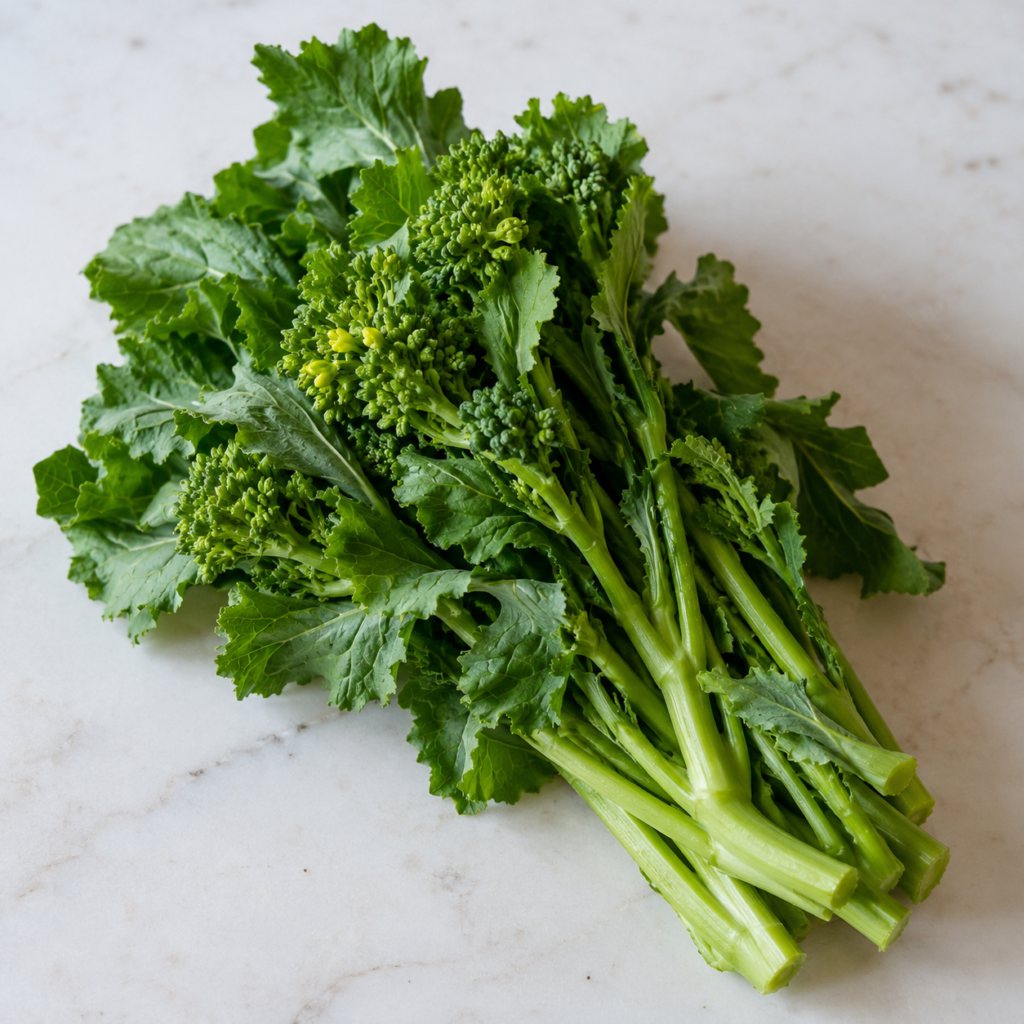
Rapini and broccolini may look similar, but their flavours and cooking methods are surprisingly different.
We explore what sets these two greens apart, how to choose them and the best ways to prepare each.
I get that there are a good number of broccoli-averse eaters out there. While rapini, also known as broccoli rabe, will probably not change that, this appealingly pungent vegetable could certainly convert those who avoid regular broccoli because it’s just too pedestrian.
Known for its slightly challenging bitter taste, rapini is generally associated with Mediterranean cuisines that favour plenty of garlic and olive oil.
Rapini is a green, leafy cruciferous vegetable with edible buds and stems somewhat resembling broccoli. While the name and appearance will evoke broccoli, rapini is actually related to turnips. Broccolini, on the other hand, is a mild, sweet hybrid that is similar looking to rapini, but is more closely related to broccoli. Confused yet? Read on.
Broccoli and broccolini—being brassicas—are related to kale, cauliflower and cabbage. They have slight bitter notes as well, but their grassy earthy flavours tend to be in the foreground.
Rapini, related to turnips—more specifically turnip greens—shares that aggressive-but-pleasant bitter taste that works so well with rich meats, heavier sauces and luxurious soups and stews.
Broccolini, also known as baby broccoli or tender-stem broccoli, is a hybrid of broccoli and gai lan, or Chinese kale. Broccolini is the result of 1990s vegetable breeding—rapini or broccoli rabe has a long history in the Mediterranean region and has been a staple in Italian cuisine for hundreds of years.
Cooking either vegetable is easy but requires different approaches. Broccolini is quick and easy. It can be sautéed, steamed, roasted or grilled to bring out its natural sweetness and crunch. Rapini, on the other hand, really needs to be blanched before any of the above to tone down the bitterness and soften the stems. Broccolini works best in mild stir-fries or plainly roasted. Rapini is most often cooked with stronger flavours like garlic, red pepper flakes, lemon and olive oil to balance the bitterness.
With either vegetable, look for closed buds, firm, clean cut stems and a bright green colour. Avoid anything with yellow leaves and flabby stems. Trim the stems, peel any that are thick and clean rapini or broccolini as you would lettuce or spinach. Unwashed, raw and wrapped in plastic, the vegetable will keep up to a week in the crisper.
To make rapini suitable for any further preparation, blanch it in salted boiling water for a couple of minutes, then dry thoroughly. A simple but delicious way to eat this distinctive brassica is to sauté the blanched rapini in good olive oil with garlic and pepper flakes. Finish with a squeeze of lemon juice or a dash of red wine vinegar.
An interesting recipe from Food & Wine magazine involves a little more effort but is worth it.
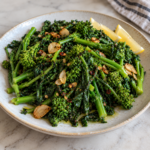
Rapini Rapassati
Ingredients
- 1/3 cup olive oil
- 6 garlic cloves, thinly sliced
- ¼-½ tsp red pepper flakes
- ¼ cup chicken or vegetable stock
- 1 lb rapini, trimmed
- ¼ tsp salt or to taste
- 1 lemon, sliced into wedges
Instructions
- Bring a pot of salted water to the boil.
- In a large sauté pan, combine oil and garlic and cook over medium heat until the garlic turns golden—watch that it doesn’t burn. Stir in red pepper and continue to cook for about 15-20 seconds. Remove from the heat and add the stock.
- Add the rapini to the boiling water and cook for about 3-4 minutes or until a knife easily pierces the thickest stalk.
- Remove rapini and drain well. Add to the oil/stock mixture and return to medium-high heat. Salt and cook, stirring occasionally, until the liquid is reduced. The rapini should be tender and coated in the oil mixture. Season to taste with salt and a squeeze of lemon. Serve on a platter, drizzle with the remaining oil in the pan and garnish with lemon wedges.



Leave A Comment