


CABBAGE – A CRASH COURSE
Story by Ceilidh Price
Is it us or have we seen a serious resurgence of the most humble of ingredients since 2020?
First, it was kale. Hailed for its nutritious benefits and relative low cost, it became the media darling for several years. Alas, thanks to supply and demand, the cost crept up and perhaps good taste prevailed.
Along came the Brussels sprout—from the ugly duckling to the belle of the ball in just a matter of months. Taste deniers shoveled it in just so long as it was bacon-adjacent.
Then it was cauliflower. So simple. So inexpensive. So unassuming. It can be prepared in so many ways—steam it, batter it, butter it, steak it, and even rice it for those keto folks.

Origins
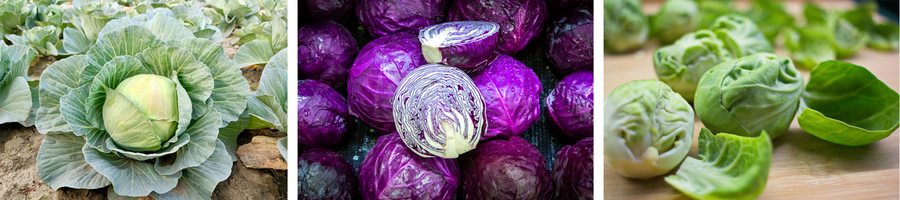
While each of these humble veggies took its turn at centre-stage, you may not have realized they all have a common lineage. They are all brassicas, kissing cousins of the cabbage.
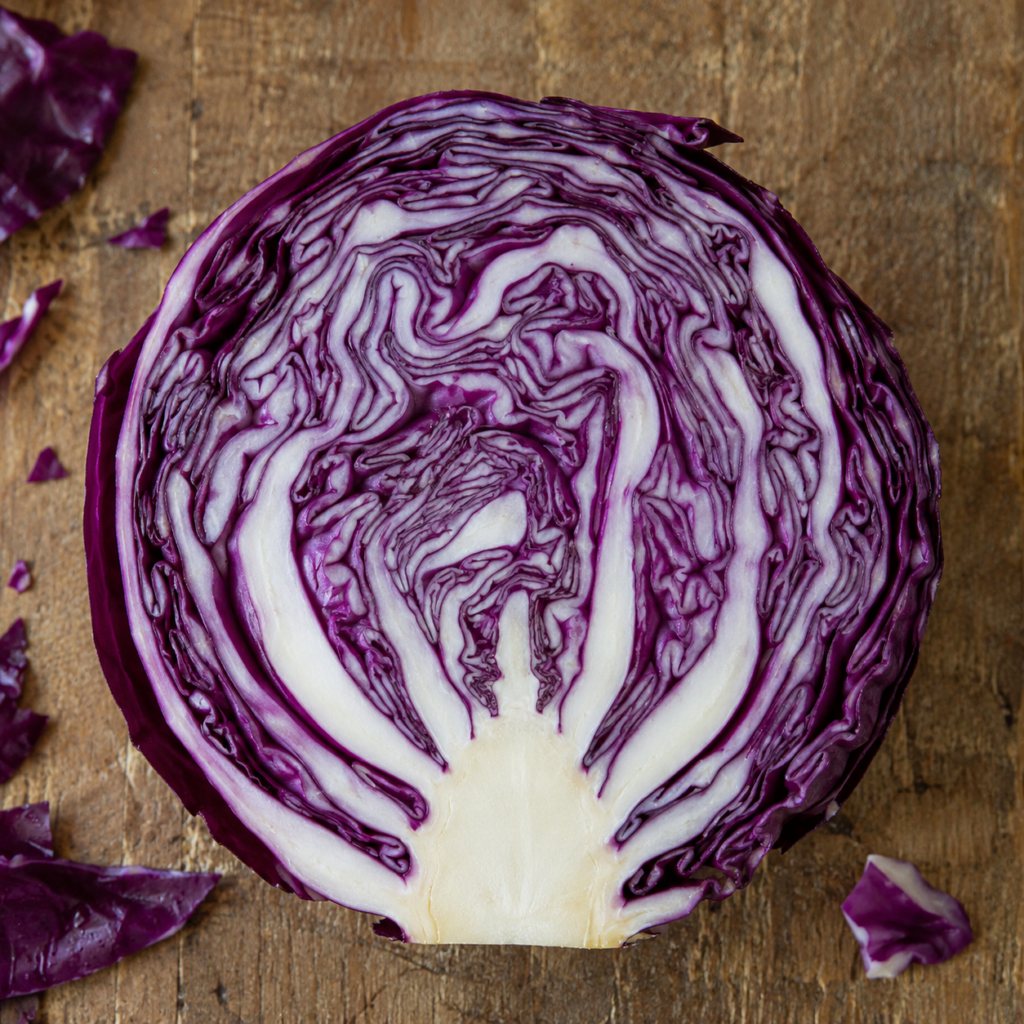
Ah yes, an underrated dense ball of fortitude and king of the crucifers. Cabbage, in all its glorious estimated 400+ cultivated forms, began as a wild and looser-leafed-but-still-stalky, plant that still grows naturally on rocky limestone sea cliffs in places like England, France, Spain, Portugal and the Mediterranean.
Cures
In its earliest uses, like so many modern foods, cabbage was believed to have medicinal qualities. The ancient Greeks believed it cured headaches, improved digestion, promoted longevity and even reduced drunkenness. Today, while we might not look for it to reduce drunkenness, we do fully expect it to “improve digestion,” if that’s what we’re calling flatulence these days.
Fermented
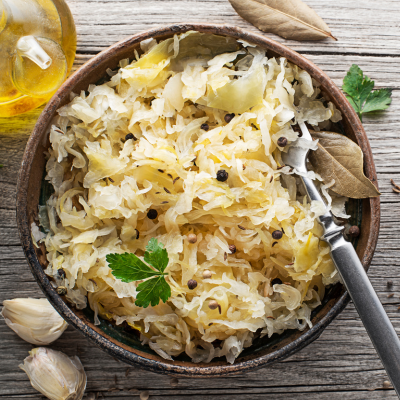
Fermented cabbage became a literal lifesaver in the 1500s-1700s as a preventative for scurvy, as it could travel long distances and for long periods of time, while maintaining its vitamin C levels. Even the infamous explorer Captain James Cook famously stocked sauerkraut to keep his crews sturdy and scurvy-free.
Chemistry
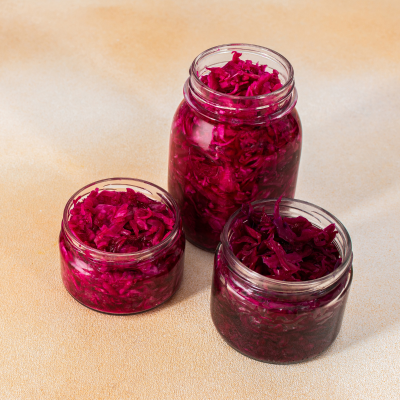
Why the heck is that purple variety called “red” cabbage anyway? No, we are not collectively colour-blind. It comes down to chemistry and etymology. The pigment in this variety is anthocyanins, which also gives blueberries, blackberries and “red” grapes their colour. While it appears purple in a neutral setting, if it becomes acidic it turns bright red or magenta, and if it becomes alkaline it turns blue or even greenish. In ancient times, colours in this family were all deemed “red” and that historical name stuck.
So why is cabbage such a staple? Consensus among chefs and food writers is that it’s because it:
● Produces large harvests
● Tolerates cold weather
● Stores stably for months—even fresh, and more so when jarred, pickled or fermented
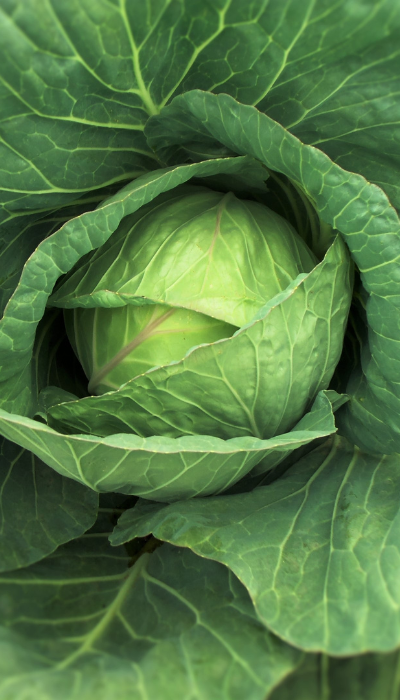
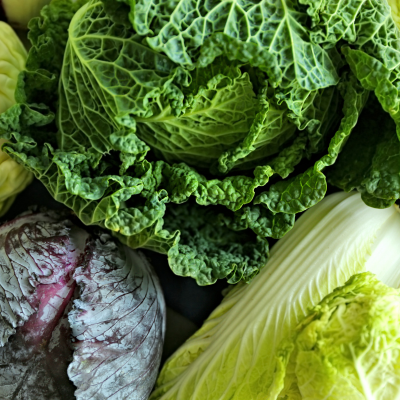
● Has enormous varietal selection—including the most common in North America—green, napa, Savoy, bok choy and red.
Cabbage Classics
Cabbage, in all its forms, has been crossing the plates and palates of humans for many thousands of years with varying degrees of status from food of kings to peasant fodder. Being lucky enough to live in a multicultural panacea where cabbage abounds, we have access to a multitude of preparations. Here are some of our favourites:
Cabbage rolls: Every culture has its version of carbs and protein wrapped in a vegetable. We’re particularly fond of the Polish/Ukrainian holubsti which graces kitchens across Alberta. We love the “deconstructed” version on a weeknight for all the flavour and half the work.
Sautéed in stir-fries: Shred it and sauté it with just about anything. We love it with pork, garlic, ginger and soy.
Kimchi: We need to talk about Korean’s iconic staple of the Korean table, kimchi. It’s a fermented cabbage with spicy gochujang (red-chili-pepper paste) and other spices. Koreans are estimated to eat 37 kg of kimchi each per year. Read more about Korean Food in Calgary.
Braised: Listen, as we head into the colder season braising is better. Cabbage is particularly delicious when braised with bacon … isn’t everything?
Colcannon: May the luck (and the side dishes) of the Irish be with you. This dish is mashed potatoes, usually left over, fried in butter with, yes, cabbage — along with green onions, cream and salt.







Leave A Comment